Mighty caribou herds dwindle, warming blamed
By CHARLES J. HANLEY (AP) – 1 day ago
ON THE PORCUPINE RIVER TUNDRA, Yukon Territory — Here on the endlessly rolling and tussocky terrain of northwest Canada, where man has hunted caribou since the Stone Age, the vast antlered herds are fast growing thin. And it's not just here.
Across the tundra 1,500 kilometers (1,000 miles) to the east, Canada's Beverly herd, numbering more than 200,000 a decade ago, can barely be found today.
Halfway around the world in Siberia, the biggest aggregation of these migratory animals, of the dun-colored herds whose sweep across the Arctic's white canvas is one of nature's matchless wonders, has shrunk by hundreds of thousands in a few short years.
From wildlife spectacle to wildlife mystery, the decline of the caribou — called reindeer in the Eurasian Arctic — has biologists searching for clues, and finding them.
They believe the insidious impact of climate change, its tipping of natural balances and disruption of feeding habits, is decimating a species that has long numbered in the millions and supported human life in Earth's most inhuman climate.
Read rest of article
Tuesday, October 6, 2009

Walrus populations threatened by climate change
Climate - Act for Our Future
Walrus populations threatened by climate change
from World Wildlife Fund
The retreating sea ice of the Alaskan and Russian Arctic is forcing walruses ashore, with deadly consequences for calves. Our WWF team in Alaska has obtained high definition footage along the Arctic shorelines showing the dramatic impact climate change is having on walruses.
In recent years, as Arctic sea ice has receded far from the Russian and Alaskan coasts, walruses – including many females and their calves – have been forced to take refuge on land, congregating in large numbers at “haul outs” along the coasts. These mass congregations can lead to violent stampedes, which are particularly dangerous to young walruses. Scientists also report a recent rise in the number of orphaned calves at sea after becoming separated from their mothers.
An investigative team led by the US Fish and Wildlife Service issued preliminary findings explaining the mass death of young walrus calves that is captured on the WWF footage.The footage shows some of the more than 100 walrus carcasses that were spotted on September 14 by US Geological Survey researchers flying near Icy Cape, southwest of Barrow, Alaska.
Read rest of article
Tuesday, September 22, 2009
Eco-sin hits the news
The Baltimore Sun looks at eco-sin!! Some good confessions and testifying going on here.
"What's your biggest eco sin?
Baltimore Sun
September 18, 2009
"Kim Walker here with another guest post: I wrote earlier today about being initially hesitant about switching to a low flow showerhead. Water (over)usage is my biggest eco sin. And every time I soak in a hot bath after a long day at work, I swear it'll be my last."
"We all try to lessen our footprint, but everyone has a weakness or two."
Read rest of article
September 21st Global Wake-Up Call
When you pick up the phone, it could be me.
Hey, what's a wake-up call for you humans, anyway? Seems like the Exxon Valdez, LA Riots, the Iraq War, and Katrina didn't get through. You tell me. Is there any intelligent life out there?
Rev. Paul R. Bear, blogging polar bear
September 21st Global Wake-Up Call: "The world is sleepwalking into a crisis of epic and historical proportions."
Maldives Unimpressed with G-8 Pledge to Limit Emissions
Climate Change Requires a Real Movement
by Mohamed Nasheed, president of Maldives
September 20, 2009
cross-posted from Huffington Post
"...[N]o one in the Maldives is applauding the recent pledge of the G-8 nations to try and hold temperature increases to 2 degrees and the atmospheric concentration of CO2 to 450 parts per million. A few years ago, those might have been laudable goals, but new science makes clear they're out of date."
"After the rapid Arctic sea ice melt in the summer of 2007, scientists realized that global warming was happening more quickly and on a larger scale than they had anticipated. Wherever they looked -- high-altitude glaciers, hydrological cycles, the spread of mosquitoes -- they found change happening decades ahead of schedule. In January 2008, James Hansen, one of the world's leading climatologists, published a series of papers showing that the actual safe limit for carbon in the atmosphere was at most 350 parts per million. Anything higher than that limit, warns Hansen, could seed "irreversible, catastrophic effects" on a global scale."
"We're already above that figure -- the current concentration is 390 ppm and rising. For the Maldives, climate change is no vague or distant irritation but a clear and present danger to our survival. But the Maldives is no special case; simply the canary in the world's coal mine. Neighboring Asian countries like Bangladesh are already suffering from saltwater intrusion as seas rise; Australia and the American southwest are enduring epic drought; forests across western North America are succumbing to pests multiplying in the growing heat. And all of this is with temperature increases of nearly 1 degree -- why on earth would we be aiming for 2 degrees?"
Read rest of article
Thursday, September 17, 2009
Global warming may bring tsunami and quakes
Yes there is something earthshaking about climate change. Melting ice caps and thawing permafrost seems to bore the humans, and poppies will put them to sleep, but maybe tsunamis and earthquakes will get their attention...
Best regards,
Fr. Paul R. Bear
Global warming may bring tsunami and quakes-scientists
Wed Sep 16, 2009 5:03pm EDT
Reuters
"LONDON, Sept 16 (Reuters) - Quakes, volcanic eruptions, giant landslides and tsunamis may become more frequent as global warming changes the earth's crust, scientists said on Wednesday.
Climate-linked geological changes may also trigger 'methane burps', the release of a potent greenhouse gas, currently stored in solid form under melting permafrost and the seabed, in quantities greater than all the carbon dioxide (CO2) in our air today.
'Climate change doesn't just affect the atmosphere and the oceans but the earth's crust as well. The whole earth is an interactive system,' Professor Bill McGuire of University College London told Reuters, at the first major conference of scientists researching the changing climate's effects on geological hazards.
'In the political community people are almost completely unaware of any geological aspects to climate change.'
The vulcanologists, seismologists, glaciologists, climatologists and landslide experts at the meeting have looked to the past to try to predict future changes, particularly to climate upheaval at the end of the last ice age, some 12,000 years ago.
'When the ice is lost, the earth's crust bounces back up again and that triggers earthquakes, which trigger submarine landslides, which cause tsunamis,' said McGuire, who organised the three-day conference.
David Pyle of Oxford University said small changes in the mass of the earth's surface seems to affect volcanic activity in general, not just in places where ice receded after a cold spell. Weather patterns also seem to affect volcanic activity - not just the other way round, he told the conference."
Read rest of article
Subscribe to:
Posts (Atom)
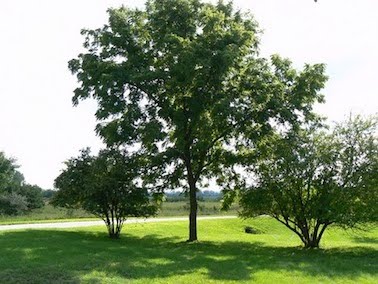
The Tree of Carbon Forgiveness
Penance -- Then and Now

In the Middle Ages, there was no buying and selling of carbon indulgences. Now it's a booming business. "The worst of the carbon-offset programs resemble the Catholic Church's sale of indulgences back before the Reformation," said Denis Hayes, the president of the Bullitt Foundation, an environmental grant-making group. "Instead of reducing their carbon footprints, people take private jets and stretch limos, and then think they can buy an indulgence to forgive their sins." The New York Times, 4/29/07

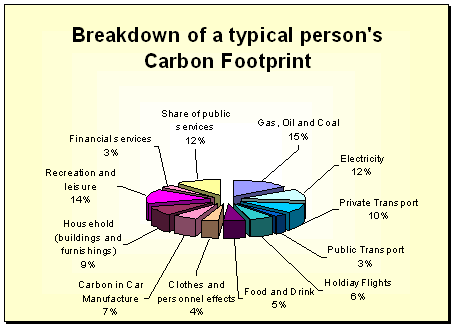
What's a Carbon Footprint?